

Local Anesthesia Powders
Local anesthesia involves numbing a specific part of the body to prevent any feeling of pain during surgical procedures. An anesthetic drug – which has numbing effects – is applied to a certain part of the patient’s body.

Dyclonine Hydrochloride
Dyclonine is an oral anaesthetic that is the active ingredient of Sucrets, an over the counter throat lozenge. It is also found in some varieties of the Cepacol sore throat spray. It is a local anesthetic, used topically as the hydrochloride salt.

Proparacaine Hydrochloride
Anesthesia, local- Proparacaine and tetracaine are indicated to produce local anesthesia of short duration for ophthalmic procedures including measurement of intraocular pressure, removal of foreign bodies and sutures, and conjunctival and corneal scraping in diagnosis and gonioscopy.

Pramoxine Hydrochloride
Pharmacologic study revealed it to be potent and of low acute and subacute toxicity, well tolerated by most mucous membranes and of a low sensitizing index in man. Like other local anesthetics, paramoxine decreases the permeability of neuronal membranes to sodium ions, blocking both initiation and conduction of nerve impulses. Depolarization and repolarization of excitable neural membranes is thus inhibited, leading to numbness.
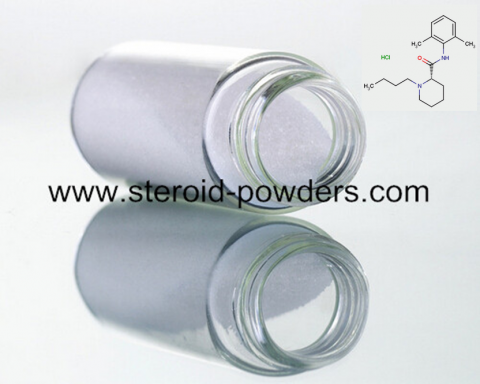
Levobupivacaine Hydrochloride
Levobupivacaine Hydrochloride is a local anaesthetic used in the form of a hydrochloride to relieve the pain of skin. This compound is a componebt of skin patch products.

Propitocaine Hydrochloride
Propitocaine hydrochloride is a local anesthetic of the amino amide type first prepared by Claes Tegner and Nils Lö Fgren. In its injectable form, it is often used in dentistry. Used for local nerve block and for spinal anesthesia; pharmacological properties are similar to those of lidocaine.

Procaine Hydrochloride
Procaine hydrochloride is a kind of local anesthetics, for local anesthesia, nerve block etc, can block the conduction of nerve fibers with anesthetic effect, strong function, low toxicity, and no addiction, but the skin, mucous membrane penetration force is weak, not suitable for surface anesthesia, clinically used to infiltration, spine and conduction anesthesia.
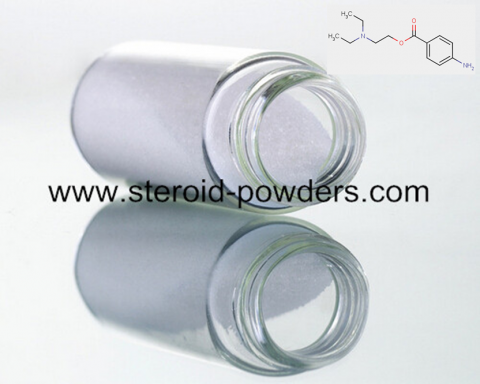
Procaine
Procaine is a local anesthetic drug of the amino ester group. It is used primarily to reduce the pain of intramuscular injection of penicillin, and it is also used in dentistry.

Benzocaine Hydrochloride
Benzocaine hcl is also called amino ethyl benzoate hcl, a colorless or white orthorhombic needle-like crystals or crystalline powder. Benzocaine hydrochloride salt is the hydrochloride salt form of the local anesthetic benzocaine, with the same pharmacological effects of benzocaine and weaker effect of anesthesia than procaine.

Benzocaine
Benzocaine (Benzocainum) is a local anesthetic, non water soluble, external use for spreading agent, for pain, trauma ulcer after operation pain, analgesic, antipruritic effect. Benzocaine topical anesthetic products for skin and mucous membrane, the role is characterized by rapid onset, of about 30 seconds can produce analgesic effect, and no permeability of mucous membrane, low toxicity, does not affect the cardiovascular system and the nervous system, but also used for protection of agent shade.
- 1
- 2